Can dynos detect clutch slip? Yes, but a chassis dyno does not identify it by magic. It exposes the mismatch between engine output, drivetrain speed, and applied load that a slipping clutch creates. For a tuning shop or race-prep operation, the difference matters: a bad pull can look like poor calibration, boost control trouble, traction loss, or transmission behavior unless the test setup and logged channels are right.
A properly operated dyno gives you the controlled load and repeatability needed to separate clutch slip from other faults. The most reliable diagnosis comes from correlating engine rpm, roller speed, vehicle speed, gear ratio, and torque behavior across more than one pull.
How Dynos Detect Clutch Slip Under Load
A clutch transfers engine torque into the transmission through friction. When clamp load, friction material, flywheel condition, release system adjustment, or thermal capacity is inadequate, the clutch disc begins to rotate relative to the flywheel and pressure plate. Engine rpm rises faster than the transmission input and driven wheels can follow.
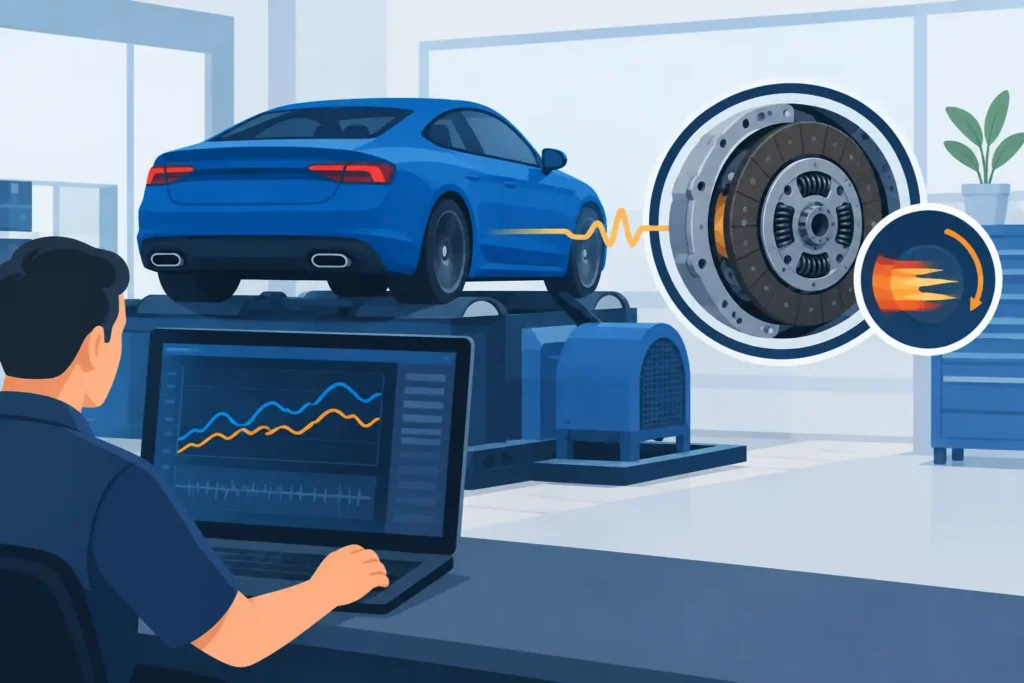
On a chassis dyno, that event often appears as an rpm flare or a distorted power curve. In a clean pull, engine rpm and roller speed increase in a predictable relationship for the selected gear. If the engine accelerates while roller speed lags, the calculated relationship between rpm and road speed changes. That is the primary signature of clutch slip.
The dyno is particularly useful because it can hold the vehicle under repeatable, sustained load. A short road pull may not heat the clutch enough to reveal the fault. A dyno pull can apply the same ramp rate, gear, starting rpm, and load target again, allowing the operator to see whether the problem appears consistently at a specific torque level or after a specific duration.
That distinction is valuable. A clutch that slips only after a hard launch, a high-gear acceleration run, or 10 seconds of full boost may pass a casual road test and still be unfit for a tuned vehicle.
The Data That Makes the Diagnosis Credible
A power and torque graph alone can raise suspicion, but it is rarely enough to prove clutch slip. Wheel horsepower may flatten or fall while engine rpm continues upward, yet several other faults can produce a similar curve. The best approach is to log and compare the channels that show whether drivetrain speed remains mechanically tied to engine speed.
Engine RPM Versus Roller Speed
This is the most direct comparison. In a fixed gear, engine rpm should follow roller speed according to the total gear ratio and tire circumference. Minor variation is normal because tires grow with speed, tire pressure changes, and some rpm signals contain electrical noise. A sudden or progressive deviation under torque is not normal.
For example, a vehicle may track correctly through the lower half of the pull, then show a 300 to 800 rpm flare as peak torque arrives while roller acceleration stops increasing at the expected rate. If that behavior repeats, particularly in the same rpm and load area, the clutch is a strong suspect.
Calculated Gear Ratio
Calculate or observe the ratio between engine rpm and roller-derived vehicle speed before the pull. During a healthy run in one selected gear, that ratio should remain nearly stable. When the clutch slips, calculated ratio changes because the engine turns faster without a proportional increase in wheel speed.
This measurement is also useful when evaluating vehicles with high-output builds. A stock clutch may survive a low-load sweep but lose grip when a braked dyno applies a more realistic torque demand. The ratio trace turns a vague feeling that the vehicle is "not pulling cleanly" into measurable evidence.
Torque and Power Shape
Clutch slip often produces a soft, unstable, or falling wheel-torque trace near the engine's torque peak. The graph may show a sharp dip followed by partial recovery, especially if the clutch grabs again as torque falls. In severe cases, engine rpm climbs rapidly while measured wheel power collapses.
Do not diagnose from this shape alone. Boost taper, ignition retard, fuel pressure loss, electronic throttle closure, knock control, and transmission interventions can all reduce delivered wheel torque. The rpm-to-speed relationship is what separates a true clutch event from an engine or control-system problem.
Repeated Pulls and Heat Response
A clutch that is marginal when cold often becomes obvious after one or two loaded pulls. Friction surfaces heat, the coefficient of friction changes, and the pressure plate may no longer provide enough effective clamp force for the torque applied. If each run starts clean but slips earlier or more severely as the assembly gets hotter, that heat trend is highly relevant.
Repeatability should be intentional, not abusive. Use controlled cooldown periods, watch temperatures, and stop testing if slip becomes severe. Continuing to load a slipping clutch can glaze the disc, overheat the flywheel and pressure plate, and turn a serviceable issue into a full replacement job.
What Can Be Mistaken for Clutch Slip?
Dyno operators should rule out other causes before condemning a clutch. Tire slip on the rollers can mimic the same general symptom, especially with inadequate strap tension, incorrect tire pressure, contaminated rollers, aggressive torque delivery, or poor vehicle positioning. On high-power rear-wheel-drive cars, tire-to-roller slip can occur suddenly enough to resemble a drivetrain fault.
A synchronized 4WD dyno adds another layer of discipline. Front and rear roller speeds must remain correctly matched for the vehicle drivetrain. Incorrect synchronization, an unsuitable test mode, or a vehicle with sensitive AWD controls can create behavior that looks like a mechanical problem. The operator must verify the dyno configuration before interpreting the data.
Automatic and dual-clutch transmissions require additional caution. A commanded downshift, converter clutch unlock, torque reduction request, or clutch-to-clutch shift event can change the rpm relationship without indicating a failed friction clutch. Test in a stable, appropriate gear and log transmission data when available.
Engine-side problems can be equally misleading. A misfire under boost, fuel delivery limitation, boost leak, wastegate issue, or ignition timing intervention generally affects engine torque first. Those problems usually do not create the classic sustained engine-rpm flare against roller speed, but they can make a power trace look equally ugly.
A Practical Dyno Procedure for Suspected Slip
Start with the basic mechanical checks. Confirm clutch hydraulic operation, pedal free play where applicable, release bearing behavior, fluid condition, and obvious oil contamination at the bellhousing. Ask what changed before the symptom appeared: a power increase, a new clutch, a resurfaced flywheel, a track event, or a transmission removal often provides the first useful clue.
Then establish a low-risk baseline pull in a gear close to 1:1 where practical. Use a conservative ramp rate and record stable engine rpm and roller speed. If the baseline is clean, increase load progressively rather than jumping directly into the hardest possible pull. A braked dyno is especially effective here because it can apply controlled load at the rpm range where peak torque occurs.
When the issue appears, compare the traces immediately. Look for engine rpm rising disproportionately to roller speed, a changing calculated ratio, and a torque trace that drops as the flare begins. Repeat only if conditions are safe and the first result is unclear. One clean baseline and one repeatable failure event are more useful than five overheated runs.
If tire slip is possible, correct the test variables before making a call. Recheck strap tension, tire pressure, roller condition, and vehicle alignment. For AWD vehicles, verify synchronized operation and appropriate axle-speed matching. The goal is to eliminate dyno-interface errors before diagnosing the vehicle.
Why Dyno Capability Matters for This Diagnostic Work
Clutch-slip diagnosis is not just a horsepower measurement exercise. It requires stable speed measurement, repeatable loading, secure vehicle restraint, and an operator who understands how the drivetrain should behave in the chosen test gear. Equipment that cannot reproduce load consistently makes borderline clutch behavior harder to distinguish from test variation.
For shops working on tuned street cars, competition vehicles, trucks, and AWD platforms, the dyno should support the actual loads the vehicle sees in service. An inertial test can reveal major slip, but controlled braking often exposes a marginal assembly earlier and with clearer data. A fully synchronized 4WD system is equally critical when evaluating drivetrain behavior on modern all-wheel-drive vehicles.
Dynomax chassis dynamometers are built around this practical requirement: controlled, repeatable testing that helps shops make decisions from data rather than guesswork. The right dyno setup will not replace mechanical inspection, but it can show exactly when torque transfer stops being reliable.
A clutch does not need to fail completely before it affects a tune, a race result, or a customer's confidence. Use the dyno to establish the rpm-to-speed relationship, apply load methodically, and stop the test when the data shows the drivetrain can no longer hold. That is faster, safer, and far more defensible than tuning around a problem that begins at the clutch.